Baia de Santa Iria
Santa Iria is a scenic north-coast São Miguel break that works on N/NW swell with light S offshore. Use the viewpoint to read sets, channels and currents.
About This Spot
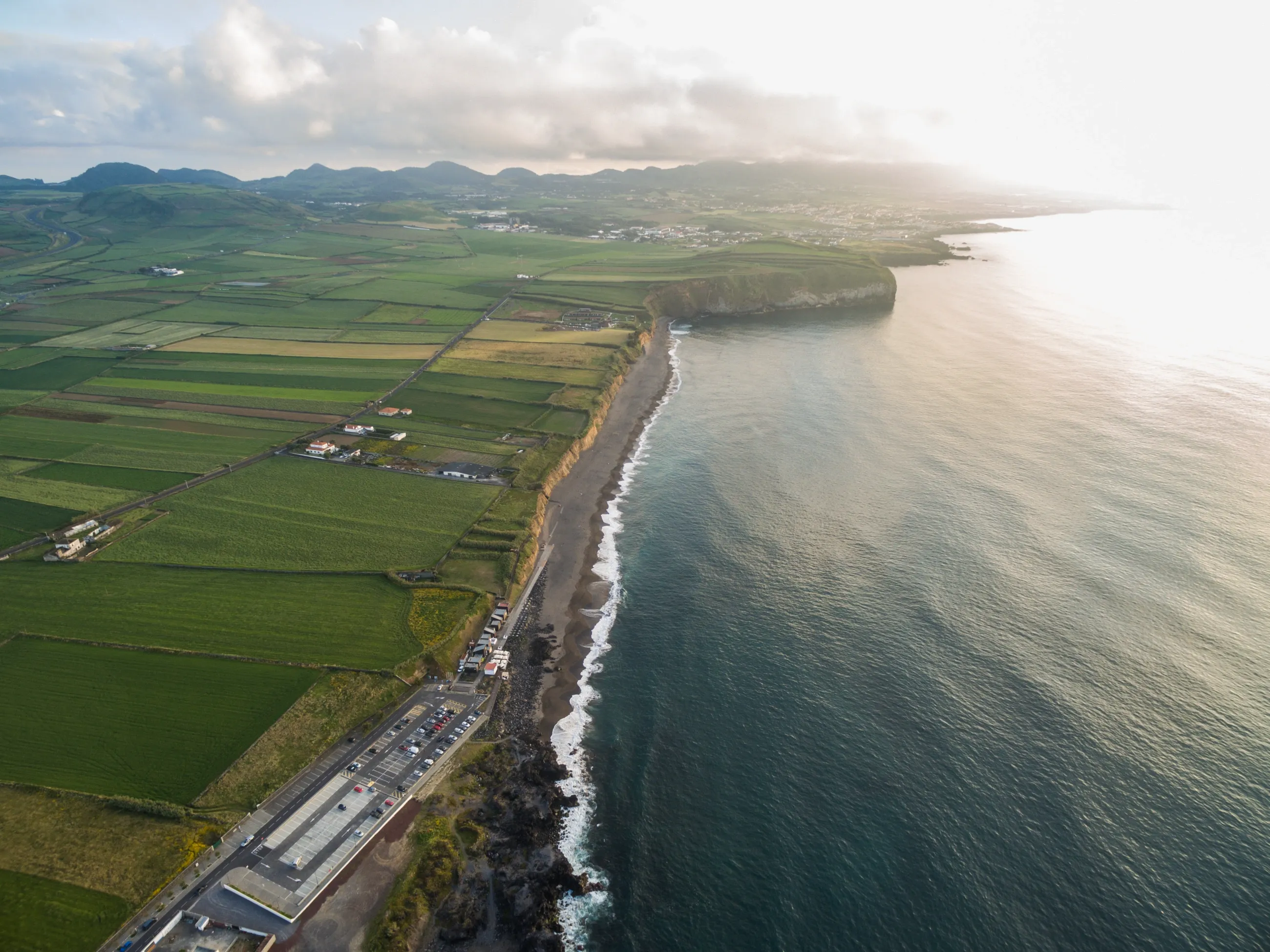
Santa Iria (or Baía) is one of the most characteristic spots on the north coast of São Miguel, known for combining an impressive scenic setting with a wave that can become very fun and long when the swell lines up just right. The area is often observed from the Santa Iria viewpoint, an elevated spot with a wide view over the bay to the west, which makes it easy to read the ocean before deciding to paddle out. For traveling surfers, this is a huge advantage: you can assess swell direction and period, lines, wind, and possible channels without already being in the water. The spot itself tends to work as a mix of reef peak and sandbar, with sections that can open up and offer a workable wall for maneuvers and, on better days, some more hollow character.
In terms of conditions, Santa Iria responds mainly to north to northwest swells and usually benefits from southerly winds, which blow offshore and clean up the face. Tide changes the behavior: mid tide is usually the most balanced, while a draining tide transitioning to rising can make certain areas faster and more technical due to rocks and bottom irregularities. Like many north coast spots, consistency improves from autumn to spring, but there can be very good days at any time, especially when there is a well organized swell and light wind. The location is relatively far from major urban centers, which in theory could mean fewer people; in practice, when it is firing, it attracts local surfers and visitors, and lineup etiquette becomes part of the surf.
The most important point is safety. The coastline is rocky and, depending on sea state, the entry can require attention to channels and the power of the breaking waves. Lateral currents can appear with certain swell directions, and getting stuck on the inside can lead to a sequence of sets with little rest. If you do not know the spot, the best approach is to observe for a while from the viewpoint or the shore, identify where the sets open more consistently and where there is a cleaner channel. Then paddle out with some margin and accept that the first session is often about reconnaissance. On big days, it is a peak for more experienced surfers; on small, clean days, it can be an excellent place to improve ocean reading and catch waves with less pressure than at more central spots.
Quick tips: best with N to NW swell and S wind. Mid tide tends to offer more options. Use the viewpoint to observe before entering and do not underestimate currents and rocks when the sea builds.
Locals First
Please respect local surf priorities. Wait your turn, be courteous in the water, and remember that locals know the spot best. Good vibes make better sessions for everyone.
Surfer Reviews
No reviews yet. Be the first to share your experience!
Share Your Experience
Current Conditions
00:51Open-Meteo.com